


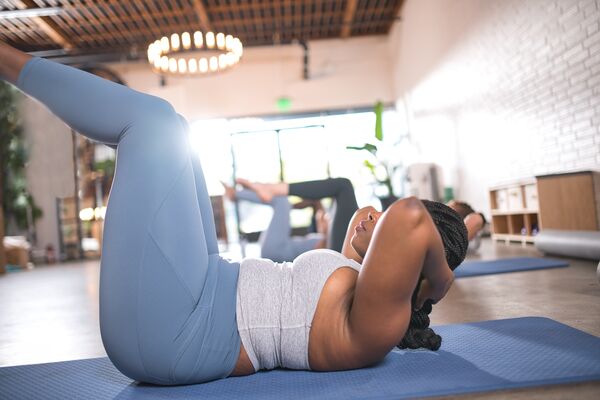
Fitness resolutions you’ll actually stick to in 2026
Fitness resolutions you’ll actually stick to in 2026, set ambitious New Year’s resolutions, quickly lose motivation due to the strict nature of said resolutions, give up completely: a familiar, well-documented arc for many of us – particularly when it comes to fitness-related goals.
A YouGov survey exploring resolutions set for 2025 found that health and self-improvement dominated the list, with 45% of those setting goals wanting to become fitter. Yet fewer than 9% said they typically stick to their resolution throughout the year.
So, why not make it a little easier for yourself when it comes to your fitness goals for the year ahead, because fitness doesn’t just look like intense gym workouts at 5am – movement is far more diverse than that.
1. Add micro workouts into your day
Somebody else highlighting the benefits of smaller bouts of movement is personal trainer. ‘Every little bit counts!’ she says. ‘Is there a way you can incorporate fitness moments throughout your day? For example, every time you refill your water, you do 15 bicep curls.’
2. Walk every single day
‘It’s the most underrated form of movement but the most sustainable. ‘When you commit to walking every single day, regardless of intensity, you guarantee that you’re moving your body, regulating your nervous system, and building consistency.
‘From an energetic perspective, walking clears stagnant energy and supports alignment. Once the habit is in place, it becomes much easier to layer in higher-impact workouts when your energy naturally rises.’
As well as being a mindful activity and supporting overall wellbeing, walking has many – often overlooked – physiological benefits, too. ‘One of the biggest misconceptions about walking is that it’s not an effective weight loss tool and that it requires a lot of time and effort for minimal results,’
Its physical benefits aren’t just limited to sustainable weight loss, either, with research finding ‘that walking regularly reduces the risk of high blood pressure, high cholesterol, diabetes, and heart disease.
3. Make mobility a priority
‘Whatever activity you’re doing in the new year, remember to stretch to prevent injury. ‘Mobility tends to be the most neglected factor across all training types but it’s so important. Simple static and dynamic stretches, such as hamstring sweeps, arm swings and lateral lunges are key to get your muscles prepped for any kind of exercise.
Content writer and personal trainer recommends stacking some stretching onto an existing habit, like evening TV time. ‘It can be easy to skip stretching, especially if you’re tired and hungry after a hard workout or a long day. However, it’s essential for preventing injuries and maintaining your range of motion,’ she says.
‘Next time you’re winding down for the night, spend 10 minutes stretching while watching your evening TV. It’ll help your body recover, and over time, you’ll notice improved flexibility and circulation.’
4. Improve your grip strength
A lecturer and strength & conditioning coach at the University of Derby, is currently working on research using hand grip strength as a clinical marker of health. ‘Strong relationships have been observed between hand grip strength and disease-specific mortality, health behaviors and quality of life.
How to test your grip strength
A squeeze test would involve grasping an object that can be deformed without causing you any pain or discomfort,’ says Davidson. ‘Suitable objects include a tennis or stress ball. Simply squeeze it for as long as you can before your grip fatigues. Being able to maintain a maximal squeeze on a tennis ball for 15-30 seconds would be a good standard to strive for.
How to improve grip strength
You can work out at home, either using specialist equipment or just things you have around the house,’ he adds. ‘2 to 3 sets of single-arm wrist curls – aim for reps of between 10 and 20 – is a good exercise to start with. You can also try rolling your wrists, wrist turnovers, and, if you have a kettlebell at home, bicep curls are a good exercise to try.


How Many Days Workout
5. Turn chores into a workout with wrist weights
Dale-Tooze also suggests adding light wrist and ankle weights to some of your household chores to turn them into a strength workout.
I recommend light weights, between one to three pounds to help build endurance and activate stabiliser muscles – all without leaving the house.’
6. Work on your posture while brushing your teeth
Dale-Tooze also has another suggestion for levelling up a daily habit that you’re already doing. ‘Your toothbrush routine is a hidden opportunity to improve your posture. Roll your shoulders up and back five times, tuck your chin in and down, or rest your forearm on the doorframe at a 90-degree angle to stretch tight chest muscles against a doorframe,’ she says. Doing this morning and evening can reduce back pain, improve flexibility, and create a habit of auto-correcting poor posture.
7. Start a daily 100 habit
If you want to make a more concrete commitment to your micro workouts, Hannah Murphy, a qualified fitness instructor, hula hoop teacher, recommends starting a daily 100 habit – and says there’s no better time to start than now.
100 of something simple: steps up the stairs, seconds of plank, hip circles with a hoop, squats throughout the day,’ she explains. ‘It builds momentum before January hits, and people feel successful straight away rather than waiting for the perfect week that never arrives.
8. Add micro workouts into your day
Somebody else highlighting the benefits of smaller bouts of movement is personal trainer. ‘Every little bit counts!’ she says. ‘Is there a way you can incorporate fitness moments throughout your day? For example, every time you refill your water, you do 15 bicep curls.
9. Do a daily dance
On the topic of adopting new daily movement habits, dance like no one’s watching every day – even if only for one banging tune while doing the chores. It is the best way to get moving and grooving and activate the body and joy – and it’s great fun too.’
Earlier this year, we also covered a scientific study that found dance rivals running and weight training for fat loss.
And if you needed more encouragement to dance for one minute a day, another study found that just 1.1 minutes of strenuous movement can lower your risk of dying by any cause in the next six years by 38%.
10. Get off the tube/bus one stop early
One way of incorporating more walking into your day is to make a change to your existing routine, for example, your work commute. An easy way of doing this? ‘Get off the tube one stop early and walk the rest, a clinical psychologist and founder of Post-Workout Therapy. ‘It sounds almost too simple, but that’s why it works, people actually stick to it. Adding a small walk into an existing routine helps regulate mood, boost dopamine gently, and reconnect you with your body without any pressure or planning.’
Even if you do it once a week, that’s more movement than before.
How To Use Resistance Bands and Exercises To Get You Started
11. Walk every single day
‘It’s the most underrated form of movement but the most sustainable. When you commit to walking every single day, regardless of intensity, you guarantee that you’re moving your body, regulating your nervous system, and building consistency.
‘From an energetic perspective, walking clears stagnant energy and supports alignment. Once the habit is in place, it becomes much easier to layer in higher-impact workouts when your energy naturally rises.
As well as being a mindful activity and supporting overall wellbeing, walking has many – often overlooked – physiological benefits, too. ‘One of the biggest misconceptions about walking is that it’s not an effective weight loss tool and that it requires a lot of time and effort for minimal results. Its physical benefits aren’t just limited to sustainable weight loss, either, with research finding ‘that walking regularly reduces the risk of high blood pressure, high cholesterol, diabetes, and heart disease.
How to do a Reverse Crunch Correctly