


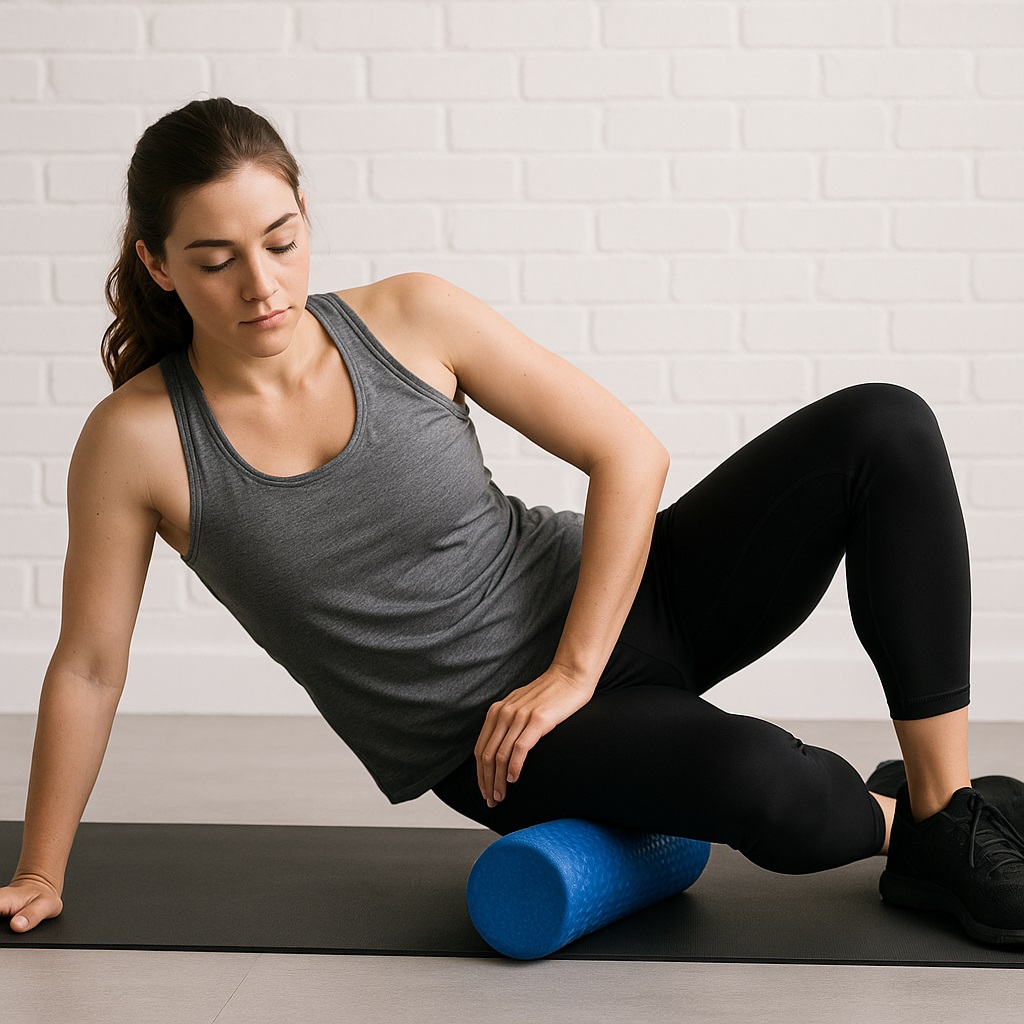
Foam Roll Your Glutes
Foam roll your glutes, foam rolling loosens tight gluteal muscles and improves your range of motion. Carefully choose a foam roller based on firmness and texture.
If you’re dealing with tight hips and sore glutes, foam roller exercises for hips and glutes are your go-to solution! This easy yet effective technique also targets muscle knots, eases pain, and boosts flexibility, helping you move more freely and feel great.
Wave goodbye to stiffness and say hello to smoother, pain-free movement! Ready to feel the difference? Moreover, let’s explore how foam rolling can take your hip and glute health to the next level—no more waiting around!
If you want to improve hip flexibility using a foam roller on your hamstrings before stretching is a good idea, especially if your flexibility is limited and you’re not injured. Additionally, this helps improve hip movement the most.
How Does Foam Rolling Help Your Body?
Many athletes use foam rolling to improve their flexibility and muscular performance. Still, you do not have to play a sport to use this tool.
You might foam roll after a workout or a long day of sitting at your desk. Foam rolling helps ease pain in people with hip osteoarthritis (OA), which causes wear and tear of the hip joint.
Other foam rolling benefits include:
- Eases muscle pain and soreness
- Decreases stress on your joints
- Helps relax your muscles
- Improves the range of motion in your joints
- Relaxes you
- Supports blood flow to your muscles
Foam Rolling the IT Band (Iliotibial Band)
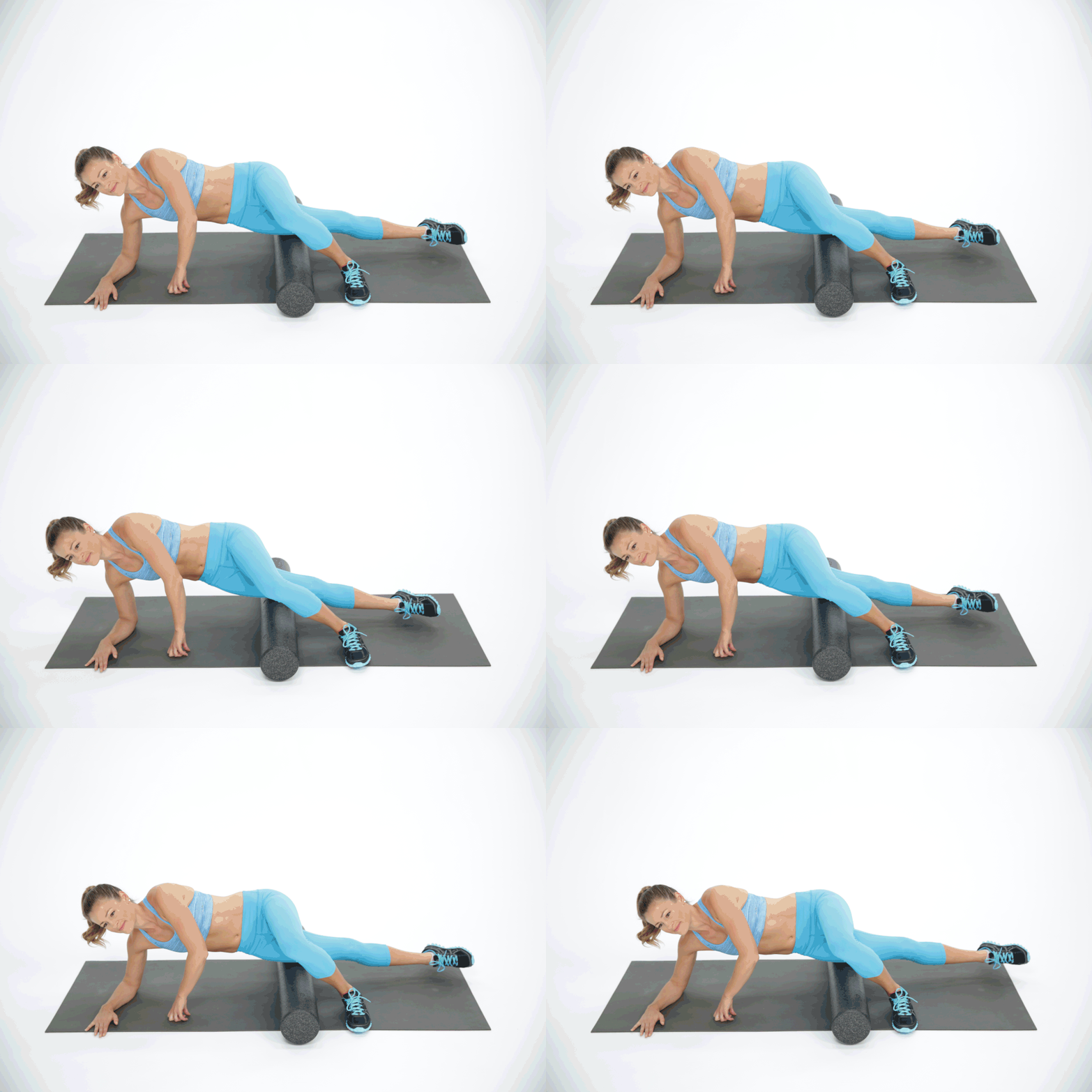

Benefits: This targets the hip flexors, helping release tension in the front of the hip.
- Begin in an upright sitting position on the floor with your legs extended in front of you.
- Then, place a foam roller just below your hip (on the outer thigh). The leg you’re rolling should be straight.
- Cross your top leg over and place that foot flat on the floor for support. Engage your core muscles.
- Use your hands and the opposite foot to support your weight.
Slowly roll down the side of your thigh toward the knee. Do not roll over the knee joint. - Moreover, move in small sections, pausing on tender areas for 20–30 seconds.
- Repeat the movement on the opposite side. Spend no more than 1–2 minutes per side.
Notes:
- Use your arms and top leg to control pressure. Additionally, the IT band can be sensitive.
- If the pressure is too much, roll slightly forward or backward to target adjacent muscles (TFL, vastus lateralis).
Signs of Weak Glutes & How to Strengthen Them
Foam Rolling the Glutes
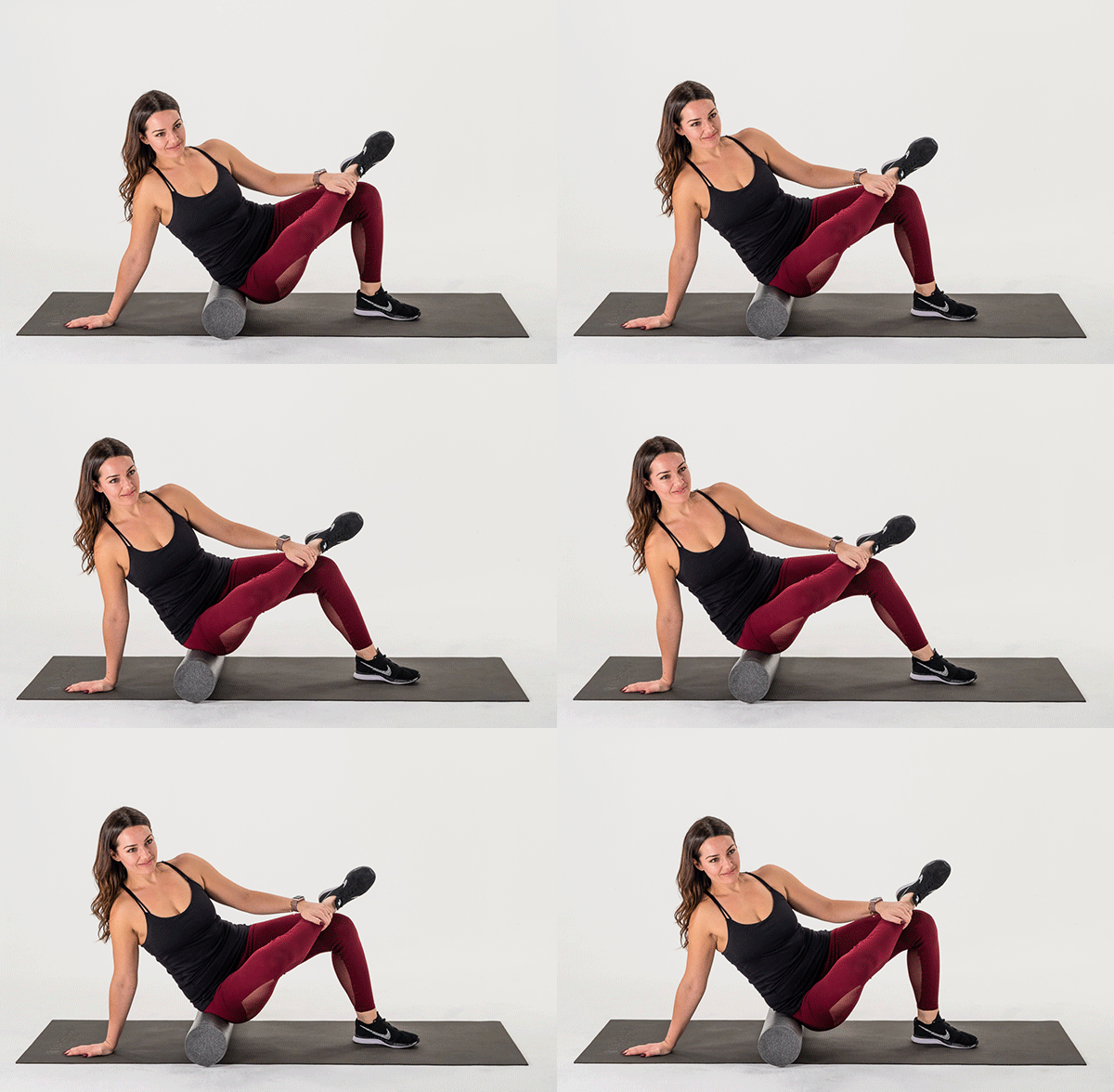

Benefits: This exercise targets the glutes, helping to release tightness and improve mobility.
- Begin in an upright sitting position on the floor with your legs extended in front of you.
- Then, place the foam roller just under your glutes.
- Place your hands behind you on the floor for balance.
- Cross one ankle over the opposite knee to form a figure-four position, which will help open up the glutes.
- Engage your core muscles.
- Shift your weight slightly to one side and use your hands for support on the floor.
- Moreover, hold on to any tight spots for a deeper release.
- Move in small sections, pausing on tender areas for 20–30 seconds.
- Repeat the movement on the opposite side. Spend no more than 1–2 minutes per side.
Foam Rolling the Hamstrings

Benefits: This targets the hamstrings but can also help alleviate tension around the hips.
- Begin in an upright sitting position on the floor with your knees bent and feet flat on the floor.
- Maintain good alignment with your upper body.
- Then, straighten one leg and place the foam roller under your thigh.
- Place your hands at the back for support as you lean back to increase the angle of your body.
- Engage your core muscles. Slowly move the roller along the length of your hamstrings.
- Moreover, repeat the movement 10 times.
- Relax and repeat the movement on the opposite side.
Foam Rolling the Hip Flexors
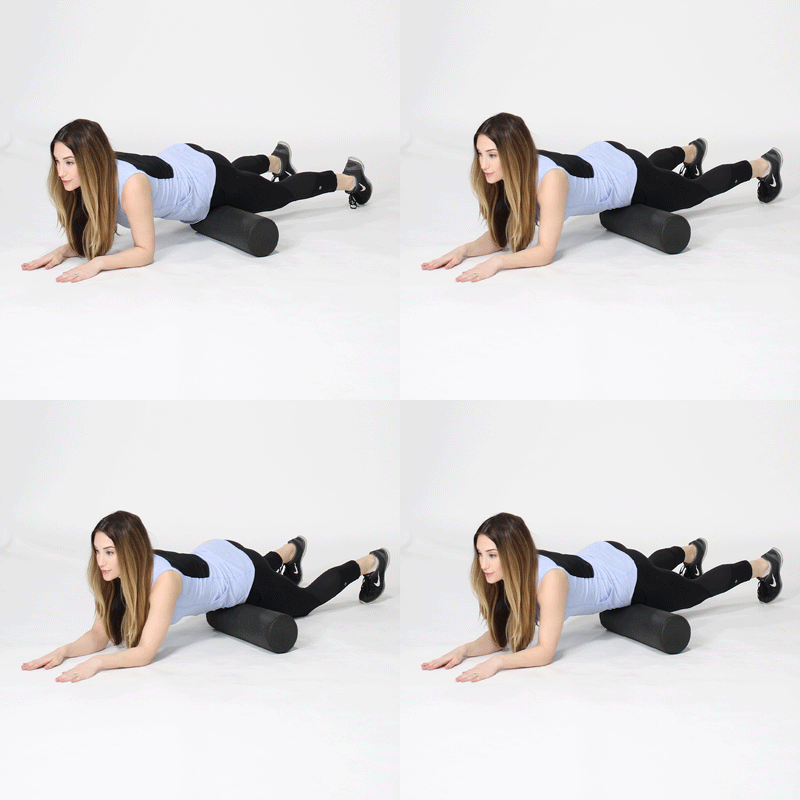

Benefits: This helps release tightness in the front of the thigh, which can affect both the hip and knee area.
- Begin in a forearm plank position with your body aligned and your core engaged.
- Then, place the foam roller along the outer thigh, starting just below the hip.
- Shift your weight slightly forward and engage your core muscles,
- Moreover, roll back and forth, moving from your hip area down toward your lower belly.
- Focus on tight or tender spots by pausing for up to 10–15 seconds.
For added pressure, adjust your body angle or lean forward slightly. Additionally, this exercise targets the hip flexors, helping release tension and improve flexibility in the hip area.
Foam Rolling the Lower Back (Thoracolumbar Fascia)
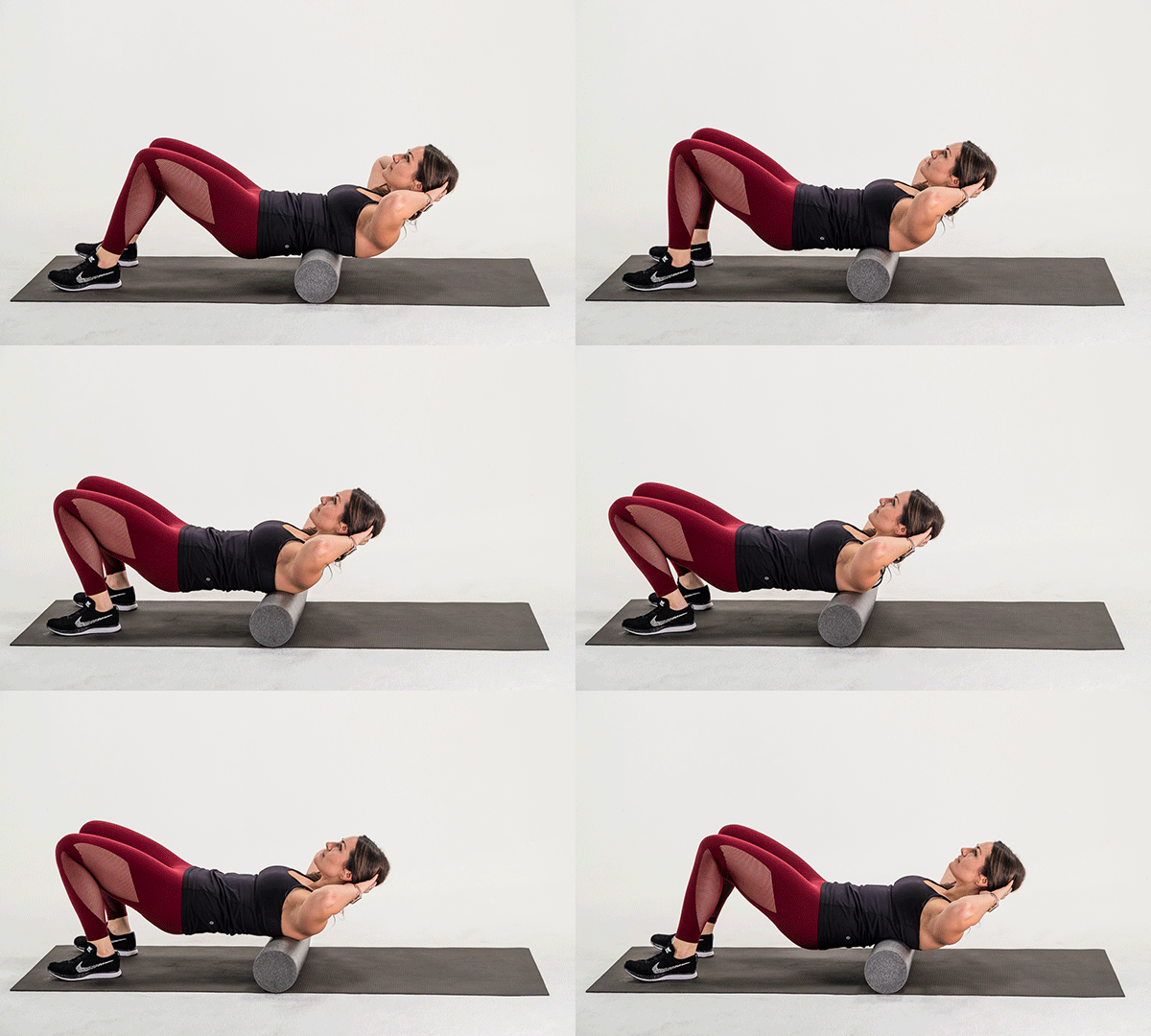

Benefits: This can release tension in the surrounding muscles and fascia, helping with hip and lower back mobility. Avoid rolling directly on the spine; instead, focus on the muscles on either side.
- Begin by lying on your back with your knees bent and feet flat on the floor.
- Then, place the foam roller under your lower back, just above your hips.
- Then, support your head with your hands and gently lift your hips off the ground.
- Engage your core muscles.
- Moreover, slowly roll back and forth along the lower back and the sides, focusing on the muscle areas rather than rolling directly on your spine.
- Moreover, repeat the movements with 10 repetitions.
You can adjust the movement to target specific areas of tension. Additionally, this exercise helps release tightness in the lower back and thoracolumbar fascia, improving flexibility and reducing discomfort.
Are There Any Risks To Watch Out For?
Foam rolling is usually safe, but some people may need to be cautious. Experts advise not foam rolling if you have a broken bone, muscle strain or tear, or open wound. The force of the foam roller might worsen existing injuries.
Talk to a doctor before foam rolling if you have:
- Deep vein thrombosis (DVT), or a blood clot that forms in a vein deep in your body and affects blood flow
- Local tissue inflammation
- Myositis ossificans, or what happens if bone forms in your muscles or tissues after an injury12
- Osteomyelitis, or a bone infection13
Tips for Using a Foam Roller
Anyone can use a foam roller to ease muscle pain, improve range of motion, and stretch.
Here are some tips for getting started:
- Consider the texture: Some foam rollers are textured with ridges that help loosen up deep knots.
- Ease discomfort: You might feel more pain when foam rolling over a particularly tight muscle. Try easing up the pressure, then lightly roll back and forth over the muscle. Gradually apply more pressure as your muscles adapt to the force and loosen up.
- Pick your foam roller carefully: There are several shapes and sizes of foam rollers that vary in firmness. You might opt for a long, cylindrical foam roller if you want to use it on your glutes. In contrast, a small, circular foam roller may work best for your neck and shoulders.
- Test it out: Many gyms have foam rollers that you can try out before you purchase your own.
- Try an online class: Check YouTube or workout apps for foam rolling routines that target specific body parts.