


Health Benefits of Palo Azul
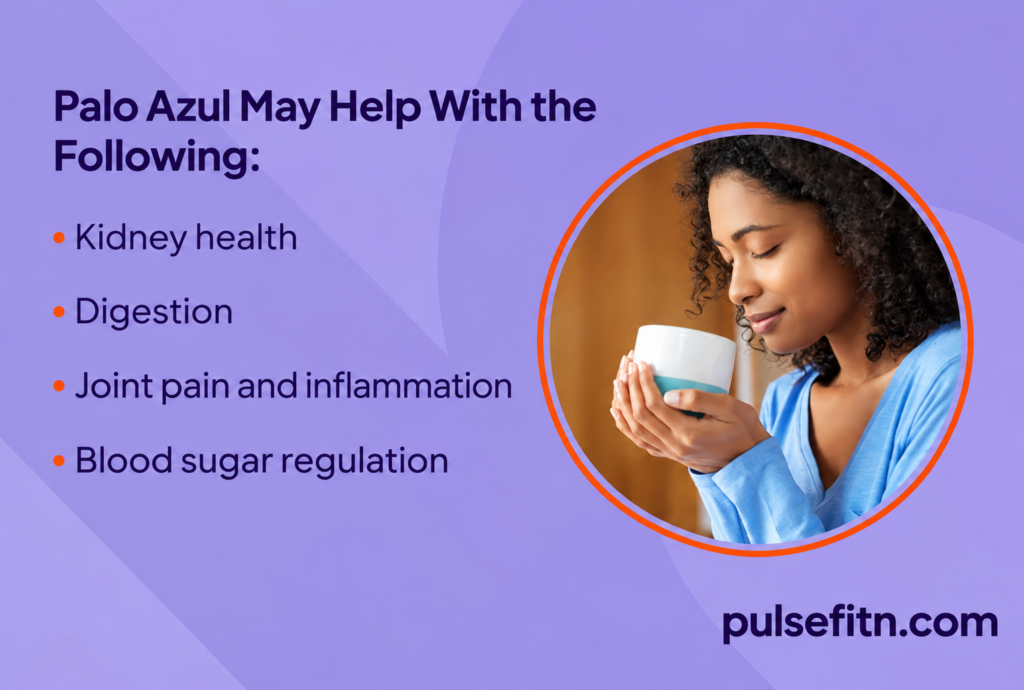
Health Benefits of Palo Azul, the benefits of palo azul (Eysenhardtia polystachya) include kidney stone prevention and blood sugar regulation. However, research is limited to animal studies.
1. May Improve Your Kidney Health
Palo azul, often called “kidney wood,” has plant compounds that may support kidney function and help prevent kidney stones. It has flavonoids and fatty acids.
What the Science Says: Animal research suggests these compounds can stop kidney stones from forming and growing due to their antioxidant, anti-inflammatory, and diuretic effects. More human studies are needed.
Antioxidant and anti-inflammatory effects help fight harmful reactive oxygen species—unstable molecules that cause kidney cell damage. By protecting the kidneys, palo azul helps prevent kidney stones from forming.
Palo azul’s diuretic effects may increase urinary flow and prevent electrolyte loss. This helps flush out toxins and crystal-forming compounds before they turn into larger stones that could harm the kidneys.
2. May Provide Digestive Support
Palo azul’s branches and leaves have D-pinitol, a compound that may ease digestive discomfort. D-pinitol accounts for nearly 27% of palo azul’s composition.
What the Science Says: Animal studies suggest this compound may work as well as standard drugs, like loperamide, in treating diarrhea. Researchers think palo azul delays diarrhea onset and prevents fluid build-up in the large intestine.
More human studies are necessary to understand palo azul’s potential in managing and preventing diarrhea.
3. May Ease Joint Pain and Inflammation
Palo azul may help relieve joint pain and inflammation linked to rheumatoid arthritis (RA). RA is an autoimmune disease in which the immune system mistakenly attacks joint tissue.
This malfunction leads to the release of inflammatory molecules called cytokines. They activate immune cells, which release more inflammatory molecules and create a cycle that harms joint function.6 This often leads to joint pain, swelling, and stiffness.
What the Science Says: Animal studies suggest the flavonoids in palo azul bark have strong anti-inflammatory effects. They may decrease pro-inflammatory cytokines.6 Researchers say palo azul also acts as an effective pain reliever.
Because these studies are on animals, more research is necessary to see if these effects apply to humans.
4. May Help With Blood Sugar Control
Palo azul may help maintain balanced blood sugar levels. High blood sugar can increase reactive oxygen species, damage fats, and interfere with insulin production and response.
Excess sugar can attach to proteins, which creates harmful compounds known as advanced glycation end products (AGEs).
These factors contribute to diabetes onset and progression.
What the Science Says: Animal studies suggest the flavonoids in palo azul may protect against cell damage by acting as antioxidants.8 Palo azul may also lower blood sugar levels and prevent AGE formation.
As with other benefits, more human research is needed to confirm that palo azul can control blood sugar levels.
How Should You Use Palo Azul?
Palo azul has a mild, woody, and subtly sweet flavor that you can enjoy in tea form.
Traditionally, preparations of palo azul tea require 1-2 pieces of bark or approximately 10 grams of the branches and leaves. However, the bark is the primary ingredient in the tea.
To prepare palo azul tea, simply do the following:
- Fill a pot with 1 gallon of spring water and bring it to a boil.
- Add 1 ounce (oz) of palo azul bark to the boiling water.
- Allow the bark to simmer for 20-30 minutes or until the liquid turns a deep amber color with a blue, fluorescent hue.
- Strain the tea through cheesecloth or a fine-mesh strainer to remove bark and excess debris.
- Pour the tea into a cup and enjoy it either hot or cold.
- Refrigerate the remaining tea to preserve the plant compounds and antioxidants.
Are There Any Side Effects of Palo Azul?
Although palo azul has been used for centuries, very few scientific studies have determined its safety and efficacy. Limited animal research suggests that it’s relatively nontoxic when consumed orally.
However, always talk with a doctor before adding herbal teas and remedies to your dietary regimen. This is particularly important for people who are pregnant or breastfeeding. Researchers have not thoroughly studied the effects of palo azul in these populations.
Since herbs can interact with drugs, talk with a doctor about any potential effects palo azul might have with any medications you take.
If you have unpleasant side effects, such as nausea or digestive discomfort, lower the dosage or discontinue its use.