


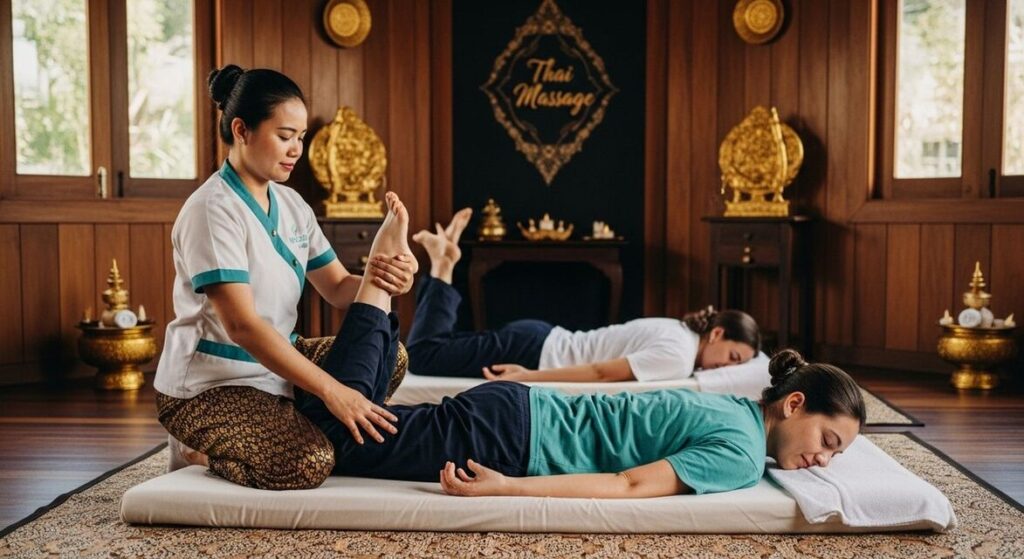
Thai Massage
Thai massage includes techniques from deep tissue pressure and yoga-like stretching. It has science-backed benefits like improved chronic pain and joint mobility.
1. May Improve Mental Health
Like other forms of massage, Thai massage can make people feel calmer and more emotionally balanced.
Research has found it may also have implications for mental health. For example, studies have found Thai massage can ease anxiety, depression, and stress, and improve sleep.
2. Offers Pain Relief
Research has shown that Thai massage can provide pain relief for certain conditions. For instance, the body stretching that happens during Thai massage may be helpful for people with back pain.
One study compared the effectiveness of Thai massage and joint mobilization—a manual therapy that passively moves joints to improve motion range and ease pain.
The study found that Thai massage was as effective as joint mobilization at reducing pain and disability in the short term among people with chronic lower back pain.
Another study looked at the effects of Thai massage on myofascial pain syndrome (MPS). This condition is marked by muscle pain that is either short-lived or chronic and can present both as local and referred, meaning the pain is felt in a place other than where it originates.
The study found that Thai massage had positive effects on people who have MPS with symptoms in the upper back region. Thai massage also decreased myofascial pain throughout the body.
3. Might Improve Muscle Function After Strokes
Thai massage may be helpful for people who’ve had strokes. For example, one study compared physical therapy to Thai massage for treating people who had a stroke.
The research found that Thai massage was just as effective as physical therapy in relieving muscle spasticity (muscle stiffness) and improving overall muscle function. Thai massage was also able to improve the quality of life for those patients.
4. May Help Relieve Chronic Pain
Chronic pain is a complicated issue with many causes and risk factors. However, some research shows that Thai massage may help manage certain cases of chronic pain.
A 2024 study found that Thai massage could help ease pain in people with chronic pain for about 15 weeks. More research is needed to better understand this effect and determine the potential long-term effects of Thai massage on chronic pain.
5. Might Relieve Urinary Tract Symptoms
Some research has shown that Thai massage may help relieve symptoms related to certain urinary tract disorders.
A study looked at lower urinary tract symptoms in older people who had benign prostatic hyperplasia (BPH), when the prostate becomes enlarged, causing urinary issues, pressure, and discomfort.
The study found that Thai massage decreased their symptoms and was comparable to a medication called Tamsulosin, which is often prescribed to treat urinary tract issues caused by enlarged prostates.
What Makes Thai Massage Unique?
Thai massage is a traditional form of therapeutic massage that has been practiced in Thailand for thousands of years.
It’s believed the technique originated in India during the time of Buddha and then spread to Asia, where it evolved into what is currently known as Thai massage.
Thai massage is considered the most popular form of alternative medicine practiced in Thailand. The technique is recognized and regulated by the Thai government, and many studies have found evidence showing clear health and wellness benefits.
How Does Thai Massage Compare to Other Massages?
Thai massage shares some characteristics with Western massage techniques, such as Swedish massage. For example, the massage therapist uses their hands to stroke and press on the skin and to loosen up tight muscles.
Unlike Western massage, Thai massage also involves manipulation and stretching of the body, including positioning the body in yoga-like poses. The therapist also uses their body weight to apply therapeutic pressure.
Additionally, unlike Western massage, where massages often occur on a massage table, in Thai massage, the massage occurs on a mat on the floor.
In other forms of massage, the person being massaged may remove their clothing during the massage. During Thai massage, the person remains dressed.
What Techniques Are Used?
Thai massage is based on the concept that the body has 10 main energy lines called sen lines. These lines are how energy moves and is transmitted throughout the body. The idea is that when the flow of energy is blocked, body dysfunction, discomfort, and pain can result.
Thai massage focuses on opening up and releasing energy along these energy lines through three main methods:
- Deep pressure massage
- Manipulation of the energy lines through body movements
- Stretching of muscles and joints
What Happens During a Thai Massage Session?
If you are going for your first Thai massage, your experience will likely be different from having a Western-style massage.
What To Wear
During a Thai massage, you will keep your clothes on. You will likely be asked to wear comfortable, loose-fitting clothing like you might wear to a yoga class.
Where It Takes Place
You will start the massage lying on a mat, flat on your back. The massage therapist will work through different parts of your body, moving along the different energy tracks (sen lines) of your body.
Feet to Shoulders
The massage therapist will typically start at your feet and then move up along each leg. The massage will then progress to your torso, shoulders, arms, and hands.
As the massage therapist moves through each part of your body, they will be applying gentle pressure with their hands and body weight. They will also be moving your body into yoga-like poses and stretching your muscles and joints.
All 4 Sides
Eventually, the therapist may turn you onto your right and then left side, massaging each side, and then turn you onto your stomach. The therapist will then repeat the massage from feet to shoulders.
The entire process usually takes about 90 minutes but can last up to two hours.
Are There Any Risks To Watch Out For?
The risks of Thai massage haven’t been widely studied. However, the technique is generally considered safe and is commonly used throughout Thailand.
However, there have been certain cases in which people have experienced adverse effects during or after a Thai massage.
For example, one 2015 study documented that a person suffered an acute heart attack after receiving a Thai massage. However, it’s unclear if the heart attack was directly caused by the massage.
The movement of Thai massage may cause your heart rate to rise, which could potentially lead to cardiovascular effects. For this reason, some experts advise against getting a Thai massage if you have an underlying cardiac issue.
There is also the potential for a Thai massage to pull or strain muscles or cause spinal cord injuries, although this is unlikely if the therapist performs the massage correctly. It’s also not clear how Thai massage may impact a pregnant person or their fetus
When Should You See a Doctor?
It’s important to check in with a doctor before getting a Thai massage, especially if you have any health conditions.
Also, make sure to find a Thai massage therapist who has been thoroughly trained and accredited. You can ask about the therapist’s background and training or ask a doctor for a recommendation.