

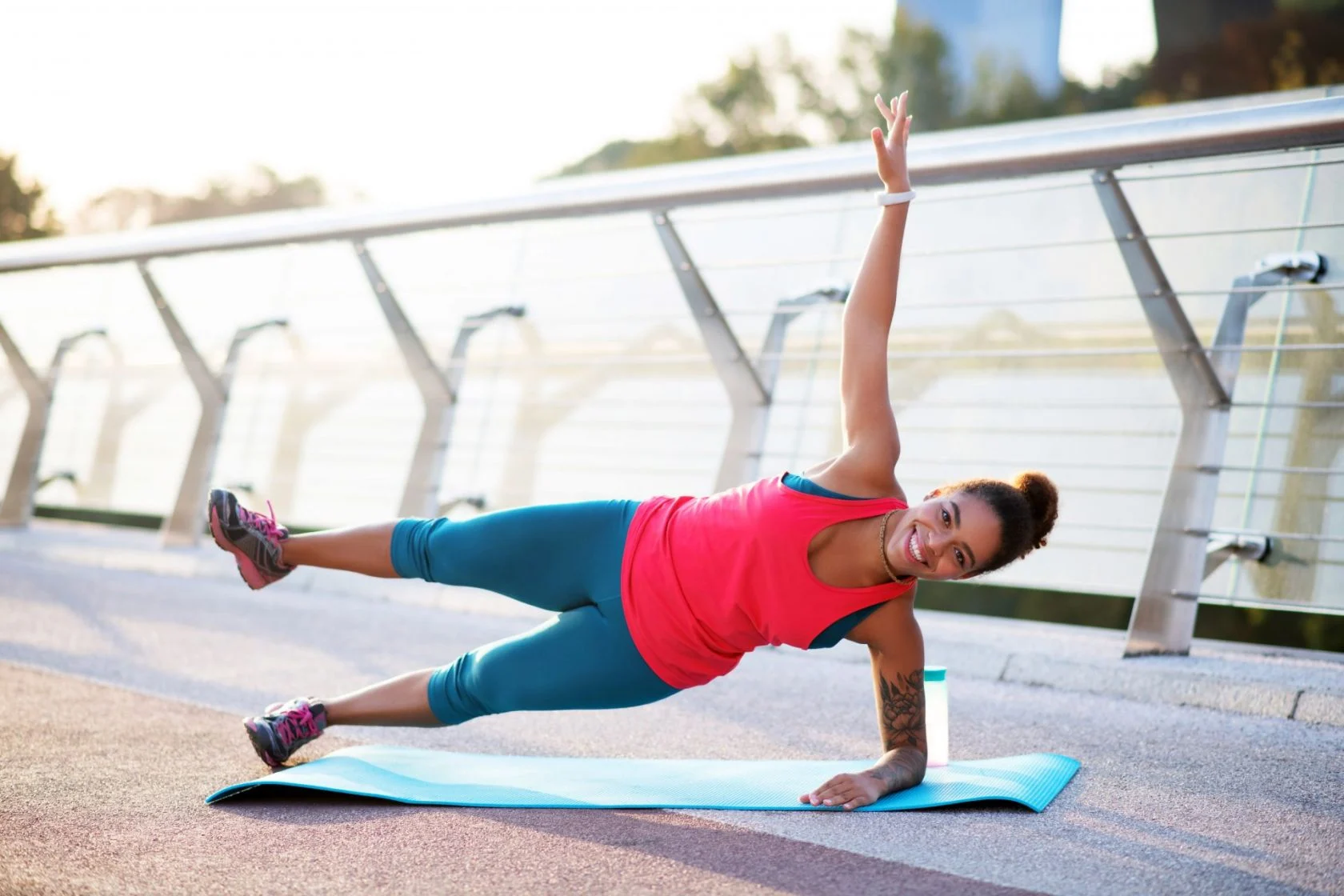
Inner thigh workout
Inner thigh workout includes exercises like bridge holds and side kicks. These moves strengthen adductors, improving balance and stability, and don’t require a gym membership.
Benefits of Inner Thigh Exercises
Inner thigh exercises help tone and sculpt your legs. Strengthening your muscles, including the adductors, helps maintain bone and muscle mass.4 The Centers for Disease Control and Prevention (CDC) advises doing muscle-strengthening exercises at least twice weekly to reap these benefits.
Other benefits of an inner thigh workout include:
- Enhances athletic performance: Inner thigh exercises help stabilize the pelvis, which helps improve movement when you change directions while moving, jump, and run.
- It’s convenient: You don’t need a gym membership or equipment to do inner thigh exercises. You can do bodyweight exercises anywhere: in your home, in your office during lunchtime, or at a hotel while traveling.
- Lowers injury risk: Strengthening your inner thigh muscles helps prevent and treat runner’s knee. This condition causes pain around the front of your knee.
- Maintains balance: Bone and muscle changes that occur with age may decrease mobility. Strengthening your inner thighs helps maintain balance and stability in your hips and knees, which can help to prevent falls in older adults.
The 5-Move Inner Thigh Workout
These five moves spotlight some of the smaller—and often weaker— inner thigh muscles, forcing them to participate. These exercises can result in stronger, sleeker, and more balanced and flexible upper legs. They also engage your core and glute muscles and improve balance and stability.
There are five exercises in this inner thigh workout, including:
- Bridge hold with alternating leg kicks
- Inner thigh tap-out
- One-sided leg pulse
- Step-up kick and rest
- Quick-tempo side kick
You’ll need about two meters of space, about six feet, or the size of a workout mat. Aim for 30 reps of each move on one side, then repeat the sequence on the other. The entire workout takes about 25 to 30 minutes. Remember also to get at least 30 minutes of moderate-intensity aerobic training five times per week.
1. Inner Thigh Tap-Out
:max_bytes(150000):strip_icc()/inner-thigh-tap-out-anderson-2000-7134442c834d4cdc9ea0852b4f29f76b.jpg)
This move involves a side plank that activates the hips and obliques while working the inner thighs. You’ll strengthen your adductors and core without placing stress on your back.
Follow these steps to complete the exercise:
- Sit with your knees bent, feet flat on the floor, and palms on the floor next to either side of your butt.
- Lift your hips, then raise your left arm.
- Extend your right leg out diagonally to the side and tap the floor (A).
- Bring your right leg back in, then cross your right ankle over your left (B). Return to “A.” Continue tapping and crossing for 30 reps.
2. Adduction Leg Lifts
This move targets the adductor muscles in the inner thighs. These muscles contract when you lift your leg and help strengthen the inner thighs:
- Lie down on your left side. Bend your right (top) leg in front of your body, and keep your left (bottom) leg straight.
- Lift your left leg upward, and hold for a few counts.
- Lower the leg to the ground with control.
- Repeat for 30 reps, and then switch sides.
3. Step-Up Kick and Rest
:max_bytes(150000):strip_icc()/step-up-kick-rest-thighs-anderson-2000-f8989b64498f4cc2a5759b27d0c566f7.jpg)
This move targets both the inner and outer thigh. It activates the glute and leg muscles, including the hamstrings and quads. Strong glutes help improve mobility and bolster pelvic stability.
Take note of these steps to complete the exercise:
- Start in Child’s Pose (A).
- Lift up into a kneeling lunge, placing your left foot flat on the floor. Let your arms hang at your sides (B).
- Push into your left foot to come to standing, then immediately kick your right leg up, toes pointed (C). Reverse motion back to “A,” then repeat.
4. Quick-Tempo Side Kick
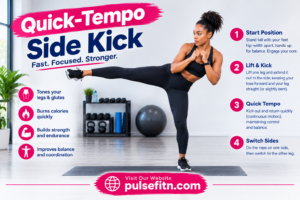
This exercise primarily targets the outer thigh, but it can also work the inner thigh. Keep your balance by engaging your core as you kick your leg out. An engaged core helps enhance pelvic stability and protects your spine.
Here’s how to do the move:
- Kneel, then lean to the left and place your left palm on the floor.
- Extend your right arm straight up, lifting your right knee off the floor (A).
- Kick your right leg out to the side (B). Return to “A,” then repeat.
5. Bridge Hold with Alternating Leg Kicks
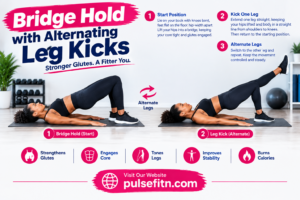
Hip bridges engage the pelvis and glutes, which helps improve balance and stability. Add in alternating leg kicks to develop strong, toned inner thighs.
Here’s how to do the move:
- Sit with your knees bent, feet flat on the floor, and palms on the floor next to either side of your butt.
- Lift your hips, then extend your left arm up (A).
- Kick your right leg out to the side with your inner thigh facing up (B).
- Lower your right foot to the floor, then kick your left leg straight up (C). Return to “A,” then repeat.
Tips
The CDC advises making muscle-strengthening activities, such as inner thigh exercises, part of your regular workout regimen. There are a few tips to keep in mind to help you reap as many benefits as possible, whether you are new to strength training or an experienced pro.
Beginners
It’s essential to start slow if you’re new to strength training. Gradually building up your strength helps reduce the risk of injuries, such as sprains and strains.
Other tips to keep in mind if you are a beginner:
- Listen to your body: Don’t overdo it or push yourself if you feel pain. Take it easy if you have sprained or strained muscles.
- Maintain proper form: Remember to engage your core and make steady movements. A good form helps you gain all the benefits of inner thigh exercises and prevent injuries.
- Rest between exercises: Repetitive motion increases your risk of injuries, so make sure to prioritize rest days.
- Talk to a healthcare provider: You might consult a healthcare provider if you’re inactive or have a chronic illness or injury. They can advise you on how to start a new workout regimen.
- Warm up and cool down: Start with 10 minutes of cardio, like gentle walking or biking. This helps activate the muscles to avoid injuries. You’ll also want to take time to bring your heart rate down and lower your body temperature after your workout. Do some gentle stretches for at least 10 minutes to cool down.
Pros
You must ensure you’re properly warmed up and maintain proper form during bodyweight exercises, even if you’re a pro. Strength training is a key part of any workout regimen, but it’s possible to overdo it.
Here are some tips for experienced strength trainers:
- Look after your body: Make sure you eat enough calories and drink plenty of water to replenish your body. Try sleeping at least eight hours per night, which is essential for recovery.
- Set goals: Challenge yourself to take your workout to the next level, but make sure your goals are realistic. Avoid pushing yourself too hard to prevent injuries.
- Take rest days: Too much physical activity can be harmful. You might be exercising too much if you feel tired, get overuse injuries (e.g., runner’s knee), or have difficulty sleeping. Take at least one day of rest after exercising a specific muscle group.
Contraindications
Inner thigh exercises are generally safe for anyone to practice, but you might want to be cautious if you have an injury or underlying health condition. People with muscle strains or sprains, for example, may want to avoid working the inner thighs until they recover. Overusing the muscles may worsen painful symptoms.
Talk to a healthcare provider before starting inner thigh exercises if you have a health condition like varicose veins. A high-intensity inner thigh workout can place pressure on the veins and worsen symptoms. A healthcare provider can recommend ways to reduce the intensity to help you work safely.